
The Cosmic Horror of Everyday Life: Understanding Modern Anxiety
In the early 20th century, H.P. Lovecraft wrote of a deep, existential dread—a fear born from facing forces too vast and complex for the human mind to comprehend. He never lived to see his work achieve fame, perhaps because the world wasn’t yet ready for that particular brand of fear. Today, that feeling is all too familiar.
Why Does Anxiety Feel So Overwhelming Today?
It may seem like an ordinary day, but for millions, it’s a battle against an unseen current. This constant stimulation has created a world where our nervous systems rarely get a chance to rest, turning everyday situations into internal struggles. But what if this feeling isn’t a malfunction?
Reframing Anxiety: Not a Flaw, But a Survival Response
This video explores a different perspective on what causes anxiety in modern society. It proposes that as an ancient survival mechanism, it represents a logical response to an illogical world. We delve into the science and sociology behind why this primal system is triggered so frequently today, from the boardroom to the bus stop.
A Visual Journey into the Anxious Mind
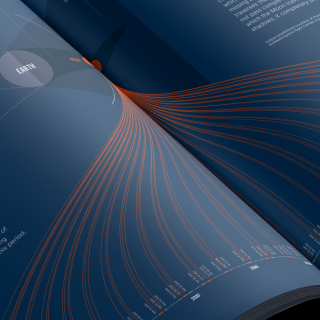
Through a unique visual lens, this infographic takes you inside that feeling—the crushing weight of modern life. It’s a journey to understand the root causes of anxiety not as a personal failing, but as a shared human experience in our current world. Because in this overwhelming reality, understanding is the first step toward finding calm. You are not alone.
Sources:
- https://www.who.int/en/news-room/fact-sheets/detail/anxiety-disorders
- https://www.mentalhealth.org.uk/about-us/news/young-people-most-likely-feel-anxious-according-our-recent-survey
- https://moodcarehealth.com/anxietys-impact-on-work-and-social-life-explained/
- https://www.theatlantic.com/magazine/archive/2020/05/childhood-in-an-anxious-age/609079/
- https://www.allure.com/story/high-functioning-anxiety-disorder
FAQ
Genuinely widespread, and the numbers have been rising steadily. An estimated 4.05% of the global population has an anxiety disorder, translating to 301 million people, with the number affected increasing by more than 55% between 1990 and 2019. In the U.S. specifically, about 1 in 5 adults (19.1%) meet the criteria for an anxiety disorder in a given year, and about 1 in 3 (31.1%) will experience one at some point in their life. So the feeling that anxiety is everywhere isn’t a distortion. It reflects a real and measurable trend.
Because, biologically, that’s exactly what it is. The fight or flight response is an evolutionary mechanism in the brain that helps humans survive, developing significantly during hunter-gatherer times when humans lived in more dangerous environments. At the core of this response is the amygdala, a structure within the limbic system, the brain’s most ancient and instinctive part, which governs fear responses and reacts to perceived danger before any other part of the brain can assess the threat. The system evolved to react instantly to physical danger, like a predator. The problem is that although immediate physical danger is now rare, this response still occurs in scenarios perceived as “social danger,” such as public speaking, even though no physical threat actually exists. In other words, the alarm system still works exactly as designed. It’s the world triggering it that has changed.
A cascade of automatic physiological changes. The process begins when the amygdala detects a threat, which activates the HPA axis (hypothalamic-pituitary-adrenal axis) to flood the body with stress hormones. This diverts resources toward immediate survival functions like heightened alertness and muscle readiness, while deprioritizing anything not immediately necessary. That’s why anxiety often comes with physical sensations, not just mental ones: a racing heart, shallow breathing, or a knotted stomach are the body genuinely preparing for a threat, even when the “threat” is an email or a deadline.
They’re related but distinct. Stress is typically caused by an external trigger, which can be short-term, like a work deadline, or long-term, like chronic illness. Anxiety, on the other hand, is defined by persistent, excessive worry that doesn’t go away even in the absence of a stressor. Stress symptoms usually go away when the stressor goes away, while anxiety symptoms can occur with chronic stress or a major event, or even when there is no identifiable stressor at all, and those symptoms tend to persist even after the original stressor has passed. The key distinction clinicians look for is duration and interference: anxiety disorders differ from short-term feelings of anxiety in that the anxiety typically persists for months and negatively affects mood and functioning.
It’s a widely used term, but not a clinical one. High-functioning anxiety is not an official diagnosis and won’t appear in the Diagnostic and Statistical Manual of Mental Disorders, but it’s a label that resonates with many high-achievers who don’t fit the typical stereotype of an anxious person. It describes someone who experiences significant anxiety but is still able to maintain a high level of productivity and achievement in their personal and professional life. The distinction from generalized anxiety disorder lies in the response pattern: with high-functioning anxiety there tends to be more of a fight response, where an individual pushes themselves to work harder in order to combat the anxiety, whereas someone with generalized anxiety might instead try to remove themselves from the anxiety-provoking situation. The catch is that looking fine on the outside doesn’t mean the internal experience is manageable.
The evidence leans toward yes, though the relationship is more nuanced than “screens are bad.” A systematic review found that screen exposure time was most positively associated with problems in teens’ mental well-being, and social media use in particular had a negative association with well-being. Interestingly, newer research suggests it’s less about raw screen time and more about content and context: a longitudinal study found that smartphone use for passive activities like listening to music, chatting online, watching TV, and playing games produced medium to high negative effects on subsequent mental health. The always-on nature of modern connectivity means the nervous system rarely gets a clear signal that the “threat” (a notification, a message, a comparison) has passed, which lines up with why chronic, low-grade anxiety has become so common.
The data supports a genuine generational shift, not just increased awareness. There has been a 52% increase in anxiety among people aged 10 to 24 between 1990 and 2021, with 31.9% of adolescents now affected. The reasons are debated but likely multifactorial: earlier and more constant digital exposure, academic and economic pressures, and greater awareness leading to more people naming what they’re experiencing rather than dismissing it. It’s worth noting that increased reporting and increased actual prevalence aren’t mutually exclusive. Both appear to be happening at once.
Effective treatment exists and works for the majority of people who try it. Meta-analytic research shows response rates around 42% for cognitive behavioral therapy (CBT), one of the most well-studied approaches to treating anxiety. CBT is considered one of the most effective treatments for panic disorder specifically, with long-term success rates higher than medication alone, and individuals receiving it often report fewer panic attacks and reduced anxiety about experiencing future ones. Despite this, only about 1 in 4 people (27.6%) with anxiety worldwide actually receive any treatment, which suggests the bigger obstacle for most people isn’t a lack of effective options, but access and stigma.