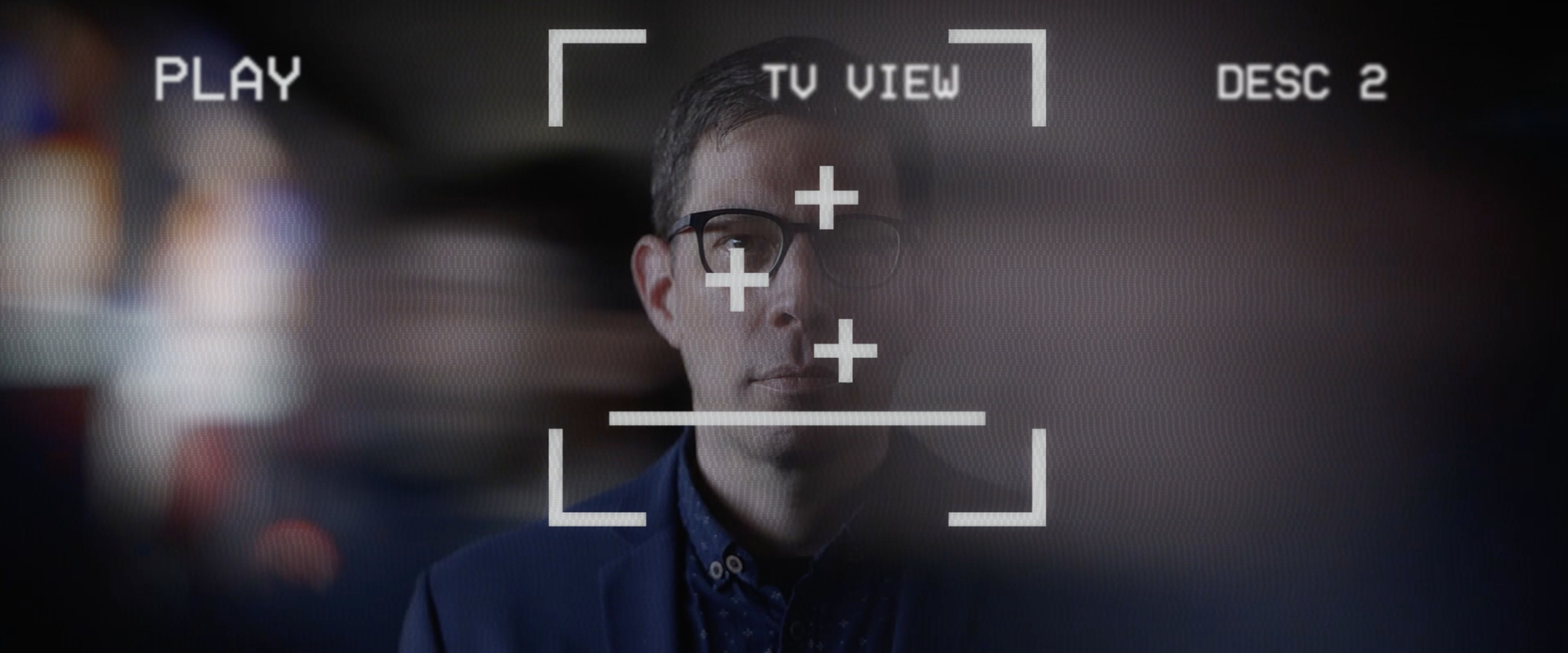


The evolution of deception has taken a terrifying leap. A century ago, cinema taught us that images could lie. Today, that deception has escaped the screen. It doesn’t just flicker in the dark; it walks among us, smiles at us, and speaks in voices we trust. And often, we have no idea we’re being fooled.
How to Spot a Deepfake: Your Survival Guide in a World of AI Deception
The evolution of deception has taken a terrifying leap. A century ago, cinema taught us that images could lie. Today, that deception has escaped the screen. It doesn’t just flicker in the dark; it walks among us, smiles at us, and speaks in voices we trust. And often, we have no idea we’re being fooled.
What is Deepfake Technology? Understanding the AI-Generated Threat
What are these digital ghosts? We call them deepfakes. This isn’t just a simple face swap video; these are AI-generated imposters—synthetic humans crafted with sophisticated deepfake technology to mimic real faces, voices, and personalities. They can make anyone say anything, do anything, be anywhere. The rise of realistic AI-generated video means the line between truth and fiction is blurring faster than ever.
The Dangers of Deepfakes: From Misinformation to Financial Scams
The most chilling part? The human eye is no longer a reliable judge. These fakes are increasingly used for deepfake misinformation campaigns, sophisticated identity theft, and online financial scams. And you don’t need a Hollywood budget to create one. With the right deepfake creation tools, almost anyone can manufacture a convincing fake, making the need for effective deepfake detection methods more critical than ever.
Your First Line of Defense: How to Spot the Signs of a Deepfake
So, how can you protect yourself from deepfakes? In this new reality, knowledge is your best weapon. That’s why we’ve created this video. Presented in a chilling analog horror style that mirrors the unsettling nature of the threat itself, this is your essential briefing. Forget complex software for a moment; your first line of defense is learning how to spot the signs of a deepfake video yourself.We call it, appropriately enough: The Deepfake Detection Survival Guide.
Because in a world where you can’t trust your own eyes, preparedness is survival.
Sources:
- https://www.openfox.com/deepfakes-and-their-impact-on-society/
- https://endcyberabuse.org/why-mainstream-media-overlooks-the-gendered-impacts-of-deepfake-tech
- https://www.deloitte.com/us/en/insights/industry/financial-services/deepfake-banking-fraud-risk-on-the-rise.html
- https://www.iproov.com/press/study-reveals-deepfake-blindspot-detect-ai-generated-content
FAQ
A deepfake uses AI, specifically deep learning models like generative adversarial networks or diffusion models, to synthesize or alter a person’s face, voice, or entire likeness so convincingly that it appears to be genuine footage. Unlike traditional editing, which cuts, splices, or filters existing footage, deepfake technology generates entirely new synthetic content: it can make someone appear to say or do something that never happened. What makes the threat especially serious today is accessibility. Creating a convincing fake once required specialist skill and expensive equipment; now it can be done with free or low-cost tools and minimal technical knowledge.
The eyes and face edges tend to be the biggest giveaways. Some models produce blinks where the eyelids appear to phase through each other rather than closing naturally, and blink duration that is mechanically regular, too frequent, too infrequent, or entirely absent is a common red flag. Eye reflections are also worth checking closely: in authentic video, reflections in both eyes generally match the visible light sources in the environment, whereas mismatched reflections suggest manipulation. Beyond the eyes, look for a visible seam, color mismatch, or blurring along the jawline, hairline, and around the ears, since these edge artifacts often become more pronounced when the subject turns their head.
Audio deepfakes leave their own distinct fingerprints. Deepfake audio often sounds unusually clean, oddly paced, or emotionally flat, with robotic undertones, awkward pauses, or a rhythm that feels unnatural. Pay particular attention to how well lip movements match consonant sounds like “b,” “m,” and “p,” which require the lips to close completely; if the mouth movements don’t quite match these sounds, you may be watching a deepfake. A useful trick recommended by security researchers is to mute the video and watch the lip movements alone, then close your eyes and listen to just the audio, checking whether each feels natural independently before judging whether they truly match when combined.
The numbers have escalated dramatically in just the past two years. Deepfake-based fraud losses in the United States reached a total of $1.1 billion in 2025, triple the $360 million recorded the previous year. Deloitte’s Center for Financial Services projects that AI-enabled fraud losses in the United States could reach $40 billion annually by 2027. The most notorious case to date remains the Arup engineering firm fraud: a finance worker was tricked into wiring $25 million after joining a multi-person video conference call featuring deepfaked, AI-generated likenesses of the company’s chief financial officer and other senior executives.
Alarmingly little. Scammers need as little as three seconds of audio to create a voice clone with an 85% match to the original speaker, and this source audio is easily scraped from social media posts, podcasts, corporate webinars, or YouTube videos. To put the cost into perspective, the deepfake robocall of President Joe Biden used to disrupt the 2024 New Hampshire primary cost just $1 to create and took less than 20 minutes to produce. This combination of minimal source material and near-zero cost is what has made voice cloning one of the fastest-growing fraud vectors.
Not reliably, according to multiple independent studies. Studies show that humans correctly identify high-quality deepfake videos in only 24.5 percent of cases, and 70 percent of respondents say they cannot reliably tell whether a voice is real or cloned. A 2025 iProov study found that only 0.1% of participants correctly identified all fake and real media shown to them, and a 2024 meta-analysis of 56 studies found that overall human deepfake detection accuracy averages just 55.54% across modalities, barely above chance. This is precisely why security experts increasingly recommend process-based defenses, such as verifying unusual requests through a second, independent channel, rather than relying on the human eye or ear alone.
Not fully, and this is an important nuance the video doesn’t cover. Automated detection tools face what researchers call an “arms race” problem. Research shows that state-of-the-art automated detection systems experience 45 to 50 percent accuracy drops when confronted with real-world deepfakes compared to laboratory conditions. Detectors trained on one generation model lose up to 60% of their accuracy when analyzing content from a different generation model, since generative AI tools evolve faster than the detectors built to catch them. Because of this, security professionals increasingly recommend combining detection tools with procedural safeguards, like callback verification and pre-agreed code words, rather than trusting technology alone.
A combination of habits and verification protocols offers the strongest protection. Before reacting to or sharing suspicious content, check its source: verified accounts and original context matter far more than how convincing a clip looks. For financial requests specifically, security experts recommend establishing verification protocols using pre-agreed code words or phrases to confirm identity before sending money, even when a voice or face sounds and looks completely familiar, resisting pressure to act immediately regardless of how urgent the request seems, and using two-factor authentication for any financial transaction, since a second layer of verification can prevent misdirected funds even if the initial request seemed legitimate. Given how convincingly synthetic media can now imitate trusted people, treating urgency itself as a red flag is often more reliable than looking for visual glitches.