


Only 17% of the world’s gold sits in vaults. So where is the rest?

Where to really look for gold
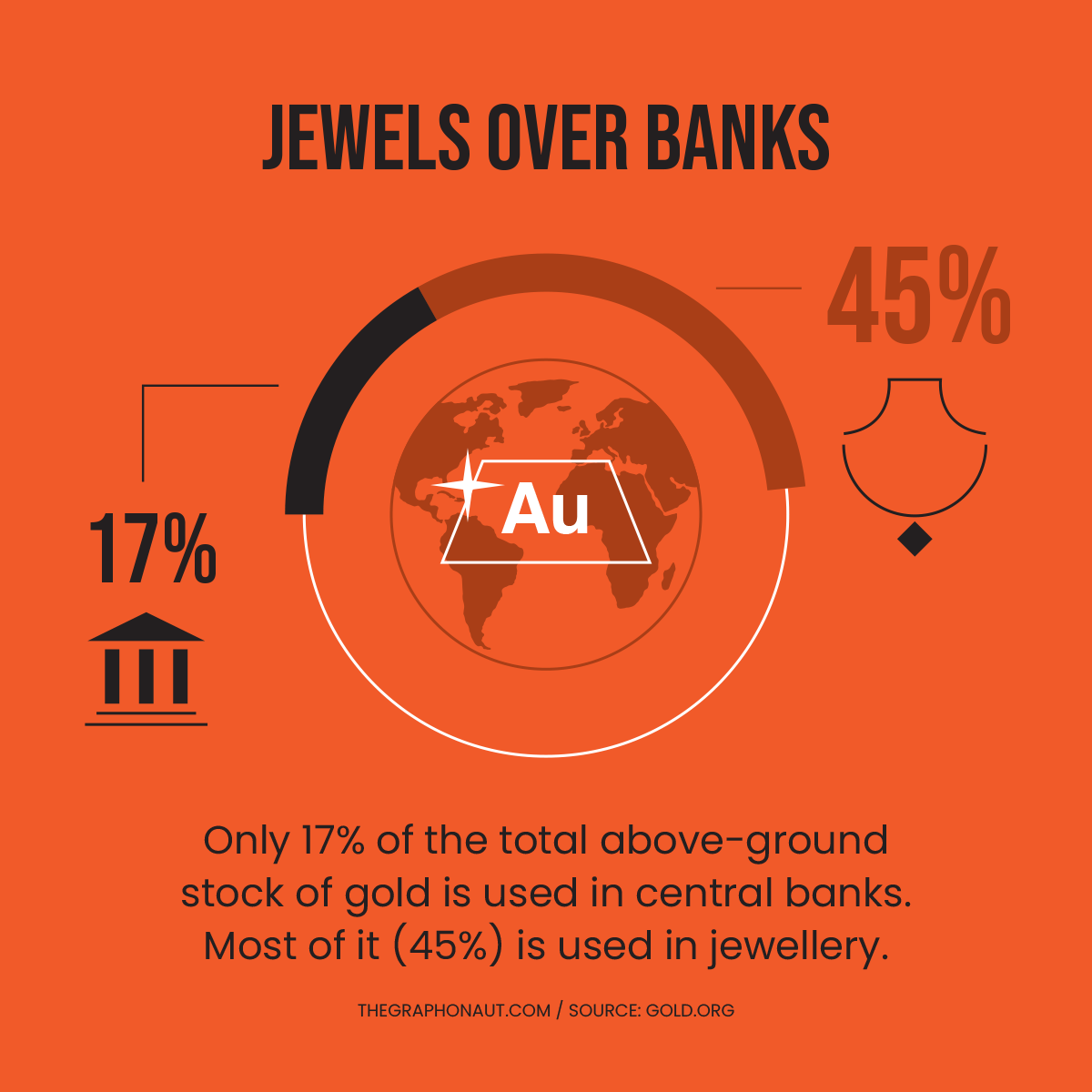
When we think of gold, we often imagine bars stacked in vaults, guarded by central banks. But here’s the surprising truth: only 17% of the world’s above-ground gold is actually held by banks. The real treasure trove? Jewelry, which accounts for a massive 45% of all existing gold.
Gold we live with, not save
That means nearly half the world’s gold is worn, not stored. From wedding rings to cultural heirlooms, much of humanity’s fascination with gold ends up on wrists and necks—not in bank reserves. Globally, over 200,000 tonnes of gold have been mined throughout history, and it’s not going anywhere—it gets recycled, reshaped, and passed down through generations.
Which country has the most gold?
The answer is the United States, with over 8,000 tonnes in official reserves—far ahead of any other nation. Still, that’s just a fraction of the global gold pie. So the next time you wear a necklace, remember: you’re not just accessorizing—you’re carrying centuries of history.
FAQ
Above-ground gold is the gold that has already been mined and is estimated to still exist. At the end of 2024, the World Gold Council estimated that about 45% was in jewelry, making it the largest single category. The rest includes bars, coins, gold-backed funds, official reserves, and gold used in products such as electronics.
The 17% refers to gold held in official reserves. A vault can also hold gold on behalf of private investors or gold-backed funds. Those bars are counted as investment holdings based on who holds them, even when a bank provides the storage.
18-karat gold is 75% gold by weight. A plain 18-karat band weighing 10 grams contains 7.5 grams of gold and 2.5 grams of other metals. Gold quantities are measured by their pure gold content.
Recycling increases the amount of gold available for sale by putting existing metal back on the market. An old necklace can be refined into a gold bar, and its gold was already part of the above-ground stock. New mining adds to that stock.
Central banks use gold to diversify their reserves. A gold bar held outright has no issuer that can default. Reserve managers surveyed also cite gold’s performance during past crises and its role as a hedge against geopolitical risk.
Source: Gold.org