

If “ending hunger” sounds like a problem of producing more, science tells a different story. We already grow enough calories globally. The real friction lies in what happens between farm, market, and plate and whether those calories deliver the micronutrients a healthy body needs.
The Tangled Web of Global Hunger
The journey to a world free from hunger isn’t about boosting production; it’s about untangling the complex web of factors that prevent food from reaching those who need it most.
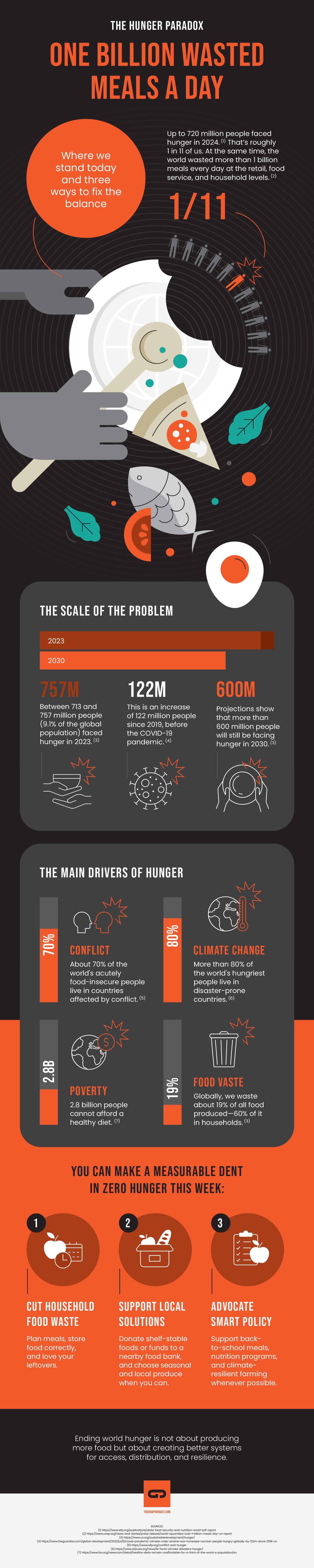
Conflict remains the most significant driver, creating instability that shatters supply chains and displaces communities. Imagine entire harvests left to rot because roads are unsafe or farmers have been forced to flee their homes. This isn’t a hypothetical scenario—it’s the reality for 70% of the world’s most food-insecure populations. (1)
A Volatile Climate and Its Human Cost
Layered on top of this is the escalating climate crisis. More than 80% of the world’s hungry live in regions prone to extreme weather. (2) When a drought withers crops or a flood washes away fertile topsoil, it doesn’t just destroy a single season’s yield; it cripples a community’s ability to feed itself for years to come.
These climate shocks are becoming more frequent and intense, pushing already vulnerable populations deeper into poverty and malnutrition. The economic fallout is just as severe, with nearly 3 billion people unable to afford even a basic healthy diet, trapping them in a vicious cycle of poverty and hunger. (3)
The numbers behind this global crisis paint a stark picture of the challenge and where our efforts can be most effective.
Infographic design by Boris Benko
Forging a Path to a Food-Secure Future
So, what can be done? The path to Zero Hunger is paved with smarter, more resilient systems. This means investing in climate-resilient agriculture, developing crops that can withstand drought, and promoting farming techniques that protect the environment. It means building robust local food systems that are less susceptible to global shocks and ensuring social safety nets, like school meal programs, are in place to protect the most vulnerable.
Change Starts at Home
On an individual level, the power to create change is closer than we think. A significant portion of the problem lies in our own homes, where 60% of all food waste occurs. (4)
By consciously planning meals, storing food correctly to prolong its life, and creatively using leftovers, we can collectively make a massive impact. Supporting local food banks and choosing seasonal produce can also strengthen community food security.
Ultimately, achieving Zero Hunger requires a global effort, but it starts with local actions and a shared understanding that a world without hunger is within our reach.
Sources:
- https://www.wfp.org/conflict-and-hunger
- https://www.wfpusa.org/news/14-facts-climate-disasters-hunger/
- https://www.fao.org/newsroom/detail/healthy-diets-remain-unaffordable-for-a-third-of-the-world-s-population/en
- https://www.unep.org/news-and-stories/press-release/world-squanders-over-1-billion-meals-day-un-report