


Slow fashion is more than just another trend. It’s a philosophy reshaping the way we think about clothing and consumption. But what led to the emergence of the slow fashion movement and its deeper impacts on society and the environment? Let’s find out.
The Rise of Fast Fashion
Fast fashion emerged in the mid-20th century, accelerated by globalization and demand for inexpensive, readily available clothing. Over the past few decades, fast fashion has dominated the market, shifting the traditional fashion cycle from four seasons annually to as many as 52 micro-seasons. That’s practically one every week. (1)
This relentless pace encourages constant consumption, often without considering the environmental and social consequences of producing clothes.
Core Values of Slow Fashion
In contrast, slow fashion advocates for a completely different approach. Beyond promoting the purchase of durable, quality clothing, it emphasizes local production and preservation of traditional crafts.
Through slow fashion, many small communities and artisans worldwide can revive nearly forgotten textile production techniques. Hand-woven fabrics, natural plant-based dyes, and traditional embroidery or knitting become valued skills, empowering small communities—especially women in rural areas—to achieve economic independence.
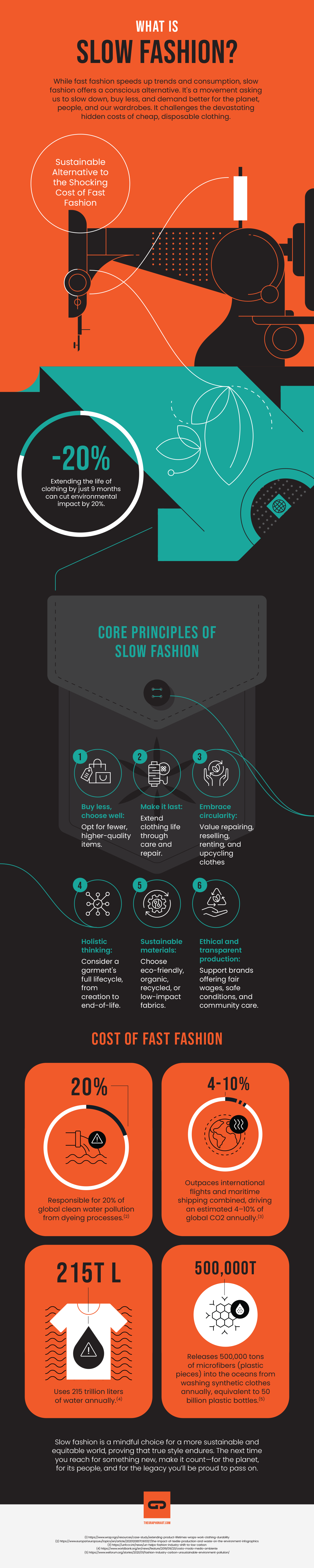
Infographic design by Boris Benko
Educating Consumers
Another crucial element of slow fashion is consumer education. People are encouraged to ask critical questions about their clothing, where it comes from, who made it, and under what conditions.
Production transparency—a core value of slow fashion—is not merely an ethical matter but also a powerful tool for raising consumer awareness about the true costs of the products they buy.
A Holistic Environmental Movement
Slow fashion is also part of a broader environmental movement that includes minimalism and conscious living. Advocates argue that genuine style is not about the number of items we own but rather how we value and utilize them. (2)
Managing a wardrobe in this mindful way can help reduce individual ecological footprints and foster a more personal, unique aesthetic.
Fashioning a Sustainable Future
Ultimately, slow fashion isn’t merely an alternative—it’s an opportunity for profound change, integrating environmental respect, human rights, cultural preservation, and personal style into a single sustainable lifestyle.
The choices we make today can significantly shape the future of fashion and the world we inhabit.