

If you sleep a little less, carefully, do you gain meaningful life, or just borrow time from your health?
A quarter of your life, asleep
Add it up, and we spend somewhere between a quarter and a third of life asleep, going by the sleep adults actually need. On an 80-year lifespan, that’s 20 to 27 years spent unconscious.
So what happens if you shave off a single hour a night? The time you win back stacks up faster than the number on the clock suggests, and so, potentially, does the cost. That trade-off is what our new interactive infographic digs into.
We’re already sleeping less
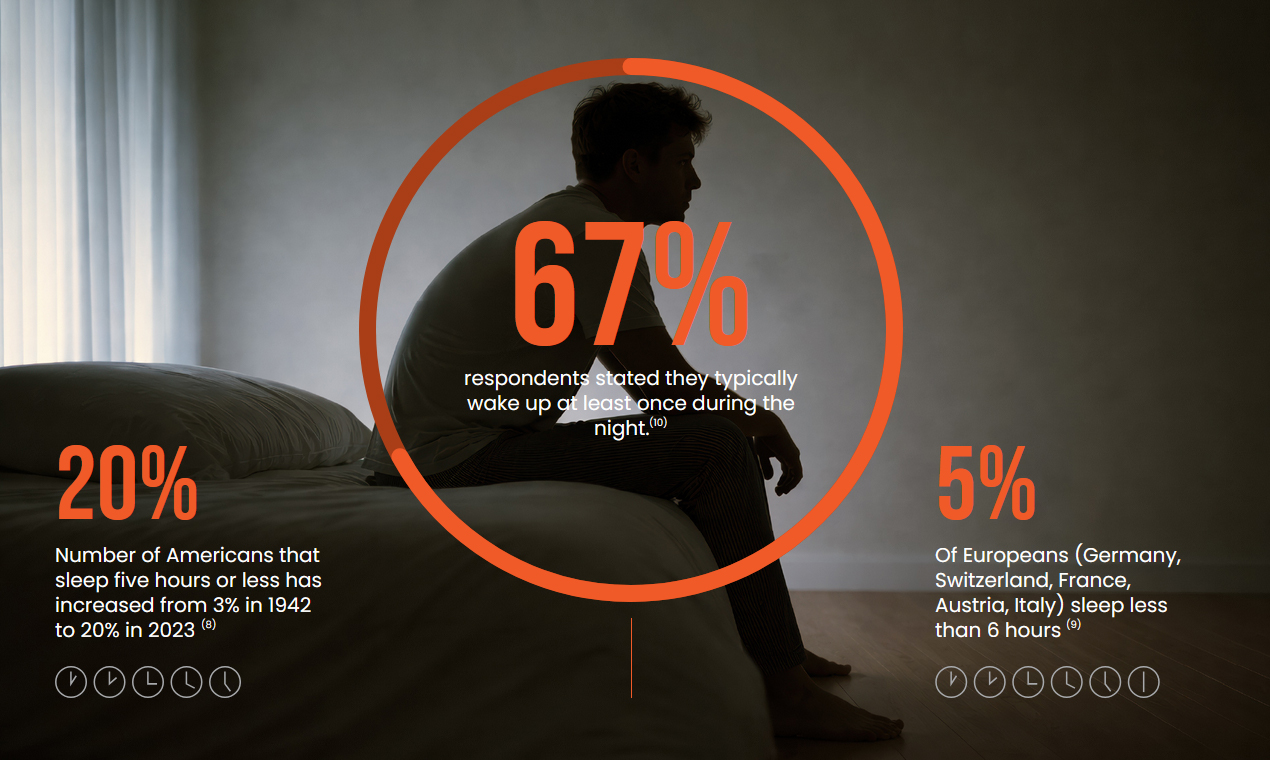
The shift is measurable. The share of Americans getting 5 hours or less jumped from 3% in 1942 to 20% in 2023. Across Germany, Switzerland, France, Austria and Italy, about 5% now sleep under 6 hours.
And the sleep we do get is patchy. In a 2019 global survey, 67% of people said they wake up at least once during the night.
The famous short sleepers (and the ones who slept more)
Nikola Tesla claimed he ran on 2 hours a night. Thomas Edison called sleep a waste and bragged about 4 or 5. Elon Musk settles around 6, and once admitted that going lower just tanked his output.
Then the other extreme. Roger Federer reportedly slept up to 12 hours a day in his playing years, and LeBron James is said to log 8 to 10 plus naps. The people whose bodies are the product tend to sleep the most.