

Hundreds of people are already frozen, waiting. The science to bring them back doesn’t exist yet.
There is a point, deep in the cold, where biological time effectively stops. Cells no longer degrade. Proteins no longer fold and unfold. Decay, which governs every living thing from the moment it is born, simply pauses. Cryonics is built on one provocative question: if you could stop the clock at the moment of death, could someone in the future figure out how to start it again?
Cryogenic technologies are already central to modern science. They power rocket propulsion, enable superconductors, underpin quantum computing, and allow the long-term preservation of biological samples. But none of those applications carry the weight of the question that sits at cryonics’ core: not how to freeze matter, but how to preserve a person — and what it would mean to bring one back.
Today, around 600 people worldwide are already preserved, with thousands more signed up and waiting. The infrastructure exists. The paperwork is in order. What doesn’t exist yet — and what no one can promise — is a method to reverse the process. To date, no human preserved through cryonics has ever been revived. The entire enterprise rests on a bet that future science will be capable of what current science cannot even approach.
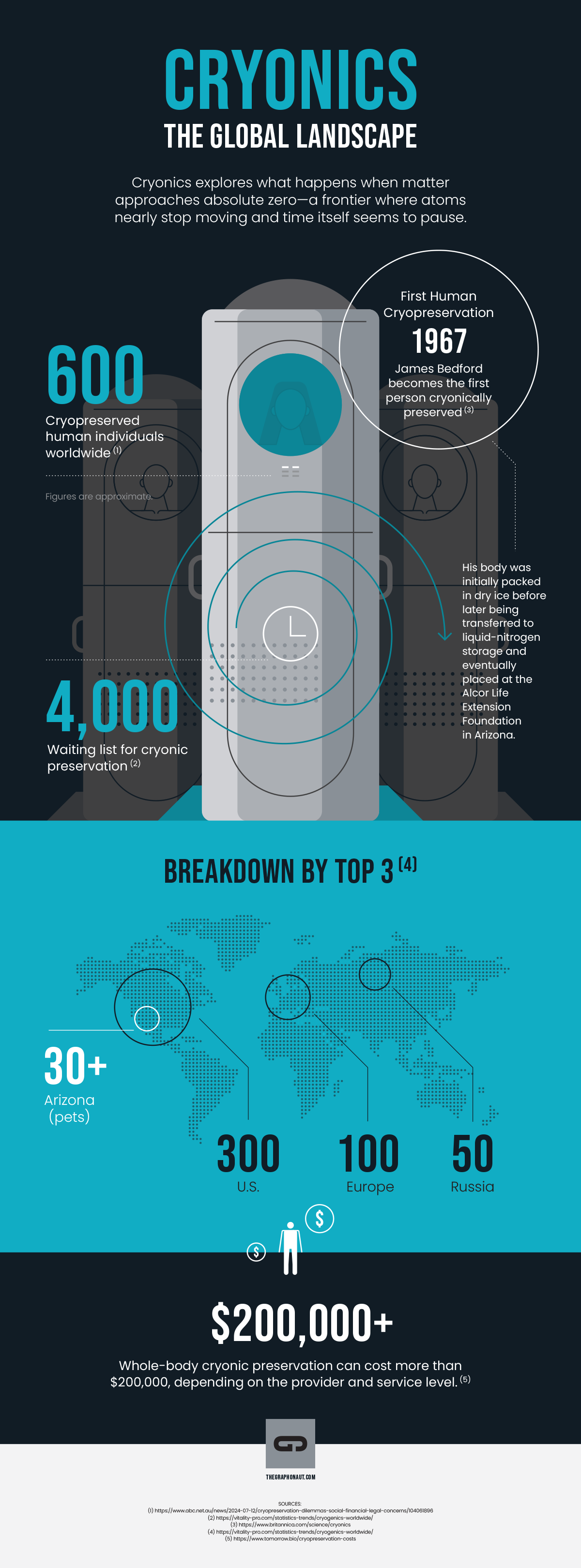
Infographic design by Boris Benko
When the doctors told Mara there was nothing more they could do, she found herself scrolling through the website of a cryonics foundation — one she had mocked, years before. Her father, a retired engineer, had always believed that nothing truly ends, only pauses. A week later, she signed the preservation papers. A standby team was present at the moment of death. The body was cooled immediately. Blood was replaced with cryoprotectant fluids to prevent ice crystal damage at the cellular level. Clinical, almost mundane — for a procedure with no precedent for what comes next.
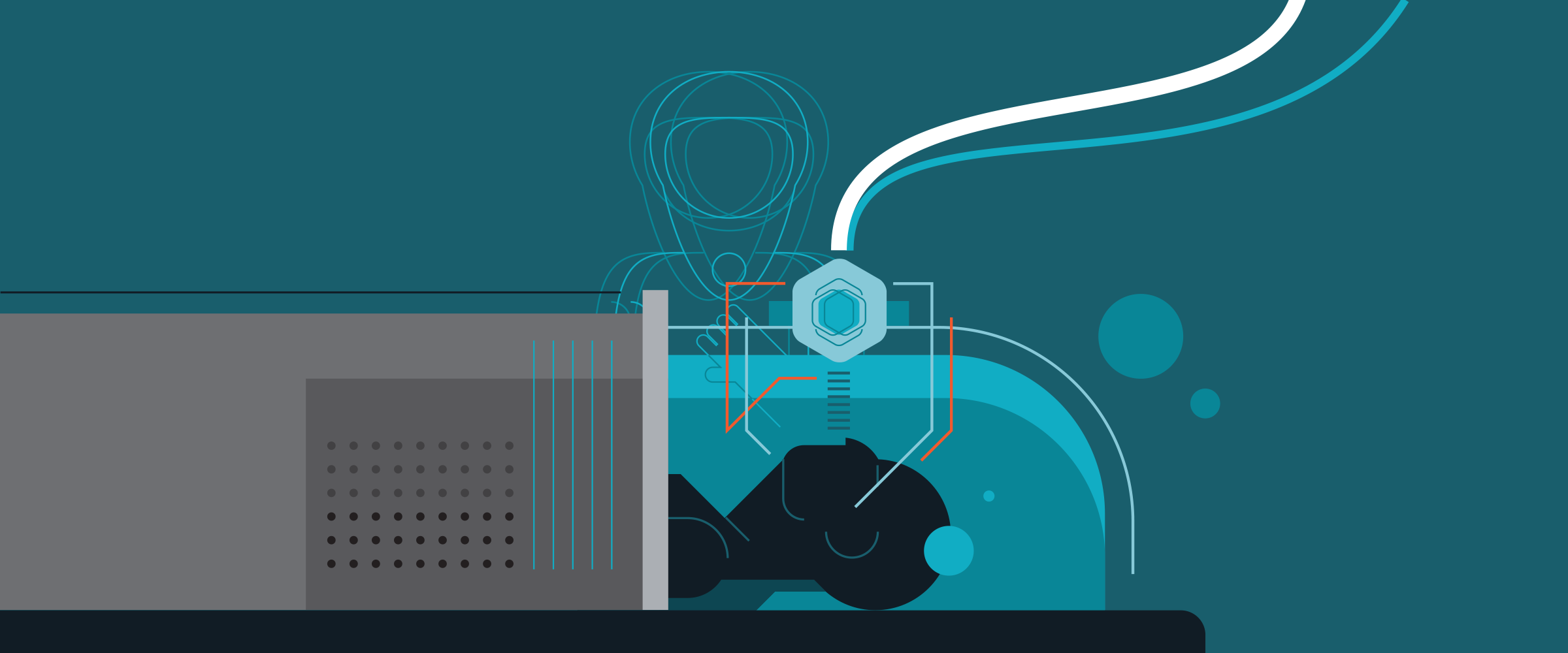
Now his body rests inside a liquid-nitrogen cryostat, held in a vitrified state that has halted every biological process indefinitely. His name has been replaced by a number in a digital registry — Case 789 — one entry among hundreds, waiting in the dark for a future that has made no promises. Revival, if it ever comes, may be centuries away.
What would that future look like? And what happens when, nearly three hundred years later, someone finally tries to bring Case 789 back — and the world he wakes into is nothing like the one he left?
The full story is in Graphonaut Magazine Issue 02 — available now in the Graphonaut Store.