
Suicide Should Not Be a Taboo: How to Recognize and Respond to Suicidal Thoughts
September is dedicated to suicide prevention—a time to raise awareness about this serious public health issue. The goal is to ensure everyone has access to the support they need for open conversations, recognizing warning signs, and seeking help.
“I wish I could disappear” or “I don’t see a future“—statements like these often carry a quiet plea: “Listen to me; help me.”
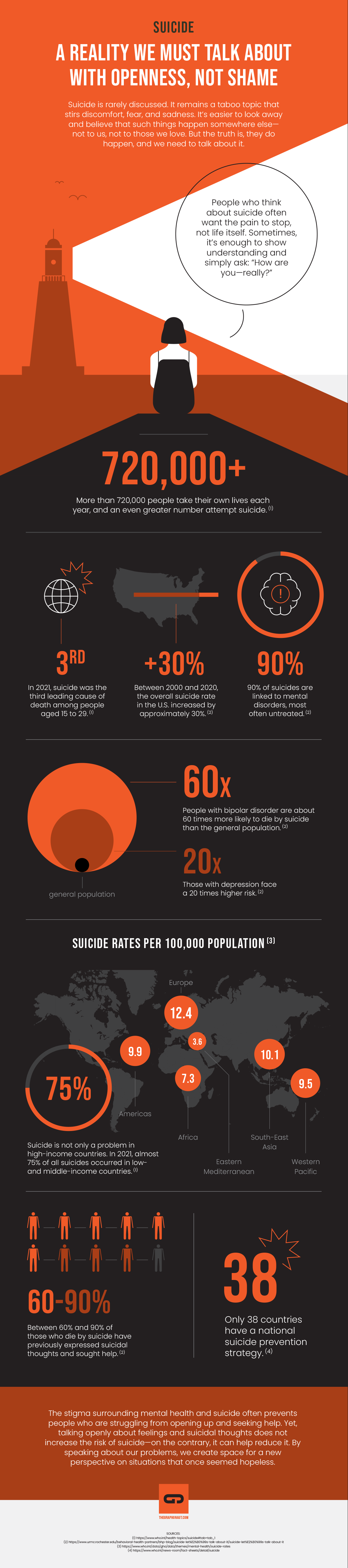
Research shows that most people who die by suicide have previously expressed suicidal thoughts. (1) That’s why, if you hear something like this from a family member or friend, take it seriously. People who talk about suicide are not just seeking attention. They’re asking for help.
Mental Health Stigma
Suicide is a tragedy that affects families and communities, leaving lasting consequences for those left behind. It occurs at all ages and is one of the leading causes of death among young people worldwide. (2)
The problem is the stigma surrounding mental health issues and suicide, which often prevents people who are thinking about suicide from seeking the help they need. Raising awareness in the community and breaking down taboos are essential for effective suicide prevention. (3)
Although statistics often associate suicide with psychological or mental health issues, it’s important to note that many people with mental disorders are not suicidal, while some who die by suicide have no diagnosed mental health condition. (1)
Suicide Risk Factors
Suicide can be a response to intense suffering that a person cannot bear or to difficulty regulating their emotions. People of all ages, genders, and ethnic backgrounds can be at risk.
Key risk factors include a history of suicide attempts, substance use, chronic pain, a family history of mental disorders or suicide, and exposure to domestic violence. (4)
Stressful life events, such as the loss of a loved one, legal or financial problems, and interpersonal stressors, like shame, abuse, harassment, or relationship difficulties, can further increase the risk, especially when they occur alongside existing risk factors. (4)
Suicide rates are especially high among vulnerable groups who experience discrimination, including refugees and migrants, Indigenous peoples, LGBTI individuals, and incarcerated people. (3)
Preventing Suicide
Experts advise that if you’re concerned about someone you know, talk to them privately, listen without judgment, and show that you care. Ask them directly if they’re thinking about suicide, take their concerns seriously, and offer support. That conversation could save a life. (4)
If the person says they’re thinking about suicide, take it seriously. Stay with them and encourage them to seek professional help. If you’re struggling yourself, don’t wait. Seek professional help or tell someone you trust what you’re going through.
It Can Happen to Anyone
Suicide is not something that happens “somewhere else.” Open conversations, attentive listening, and a willingness to provide support can make a significant difference. By breaking down stigma, raising awareness, and seeking help when needed, each of us can contribute to suicide prevention and save lives.
Sources:
- https://www.urmc.rochester.edu/behavioral-health-partners/bhp-blog/suicide-let%E2%80%99s-talk-about-it/suicide-let%E2%80%99s-talk-about-it
- https://www.who.int/health-topics/suicide#tab=tab_1
- https://www.who.int/news-room/fact-sheets/detail/suicide
- https://www.nimh.nih.gov/health/publications/suicide-faq
FAQ
Yes. Suicide is one of the leading causes of death among young people worldwide, and it affects people of all ages, genders, and backgrounds. It is a serious public health issue that touches families and communities across the globe.
Absolutely. Statements like “I wish I could disappear” or “I don’t see a future” are often quiet pleas for help. Research shows that most people who die by suicide have previously expressed suicidal thoughts — so these words should never be dismissed as attention-seeking.
No — this is one of the most persistent myths around the topic. Openly discussing suicide does not plant the idea; it creates space for honest conversation and can actually encourage someone to seek help. Breaking the silence is one of the most important things we can do.
Anyone can be at risk. Key risk factors include a history of suicide attempts, substance use, chronic pain, family history of mental disorders, and exposure to domestic violence. Stressful life events — loss, financial problems, abuse, or relationship difficulties — can further increase risk, particularly in combination with other factors. Vulnerable groups such as LGBTI individuals, refugees, and incarcerated people face disproportionately higher rates.
Not necessarily. While suicide is often associated with mental health conditions, many people who die by suicide had no diagnosed mental health disorder. Conversely, most people living with mental illness are not suicidal. The relationship is complex and should not be oversimplified.
Talk to them privately and listen without judgment. Ask them directly if they are thinking about suicide — this does not increase risk and can actually open the door to getting help. If they say yes, take it seriously, stay with them, and encourage them to reach out to a professional. That conversation could save their life.
Anyone struggling should seek professional support — a doctor, therapist, or a trusted person in their life. If you are in crisis or concerned about someone who is, contact a local crisis line or mental health service immediately.