


In a world where appearance often dictates success, many feel immense pressure to be thin. Sometimes it’s hard to tell when thinness crosses the line and becomes a problem.
Models and actors display levels of thinness that are nearly impossible to achieve, while ballet dancers, long-distance runners, and competitive athletes constantly feel the need to maintain a low body weight. The media adds to the pressure by sharing “secret” diets and weight-loss tips, and young women and teenage girls often associate thinness with higher self-esteem and a sense of control.
Recognizing the Signs
Anorexia affects more than appearance — it changes every aspect of daily life. Food becomes a constant concern: people often strictly limit what they eat, skip meals, and avoid eating in social situations. They may only eat “safe” foods and develop rigid eating routines. Excessive exercise, constant worry about weight, and episodes of bingeing become part of daily life, while withdrawal, insomnia, and low mood often follow. In more severe cases, self-harm or suicidal thoughts may occur.
Even at extremely low body weights, many patients don’t recognize the problem and have a distorted body image. Untreated anorexia can seriously endanger health, and its mortality rate is among the highest of mental disorders, second only to opioid overdose.
Most deaths are caused by heart complications and suicide, with suicide accounting for about a quarter of cases.
Curious about anorexia? Check out our infographic for a quick and clear overview.
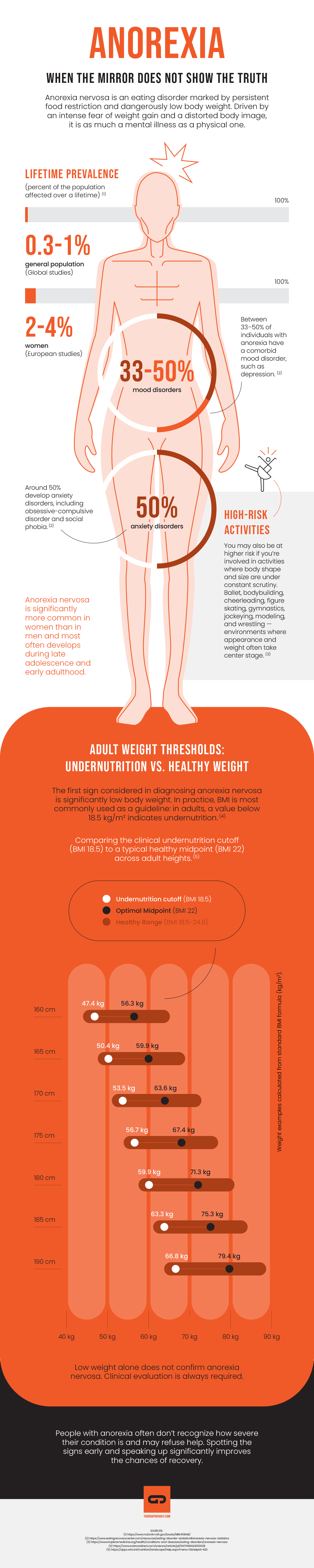
Infographic design by Boris Benko
Finding Support
Anorexia is diagnosed through patient interviews, physical exams, and lab tests. Treatment includes gradual weight gain, therapy focused on body image, and management of malnutrition-related complications. It is usually delivered by an interdisciplinary team — including a psychiatrist, dietitian, social worker, internist, endocrinologist, gastroenterologist, and nurse — working together to provide comprehensive support.
Patient and family education is key. Dietitians help families understand the importance of nutrition and limiting excessive exercise, mental health nurses support behavioral changes and stress management, and pharmacists advise on proper medication use. Ongoing support and monitoring are essential for improving outcomes.
Conclusion:
If you recognize yourself in this article, it may be the right time to seek support. Anorexia isn’t just a diet or a desire to be thin — timely help can truly make a difference.
Sources:
- https://www.ncbi.nlm.nih.gov/books/NBK459148/
- https://www.hopkinsmedicine.org/health/conditions-and-diseases/eating-disorders/anorexia-nervosa
- https://www.sciencedirect.com/science/article/pii/S1471491424000029
- https://www.mayoclinic.org/diseases-conditions/anorexia-nervosa/symptoms-causes/syc-20353591
- https://www.eatingrecoverycenter.com/resources/eating-disorder-statistics#anorexia-nervosa-statistics
- https://www.mayoclinic.org/diseases-conditions/anorexia-nervosa/symptoms-causes/syc-20353591
PHOTO: Pexels