


Breakfast Science: Unpacking the Truth Behind Your Morning Meal
For decades, breakfast has been lauded as the crucial kick-start to a productive day. We’ve been told it’s the most important meal, a non-negotiable ritual for health and weight management. But in an age of evolving nutritional science and popular diet trends, how much of what we believe about breakfast is true?
Skipping Breakfast for Weight Loss?
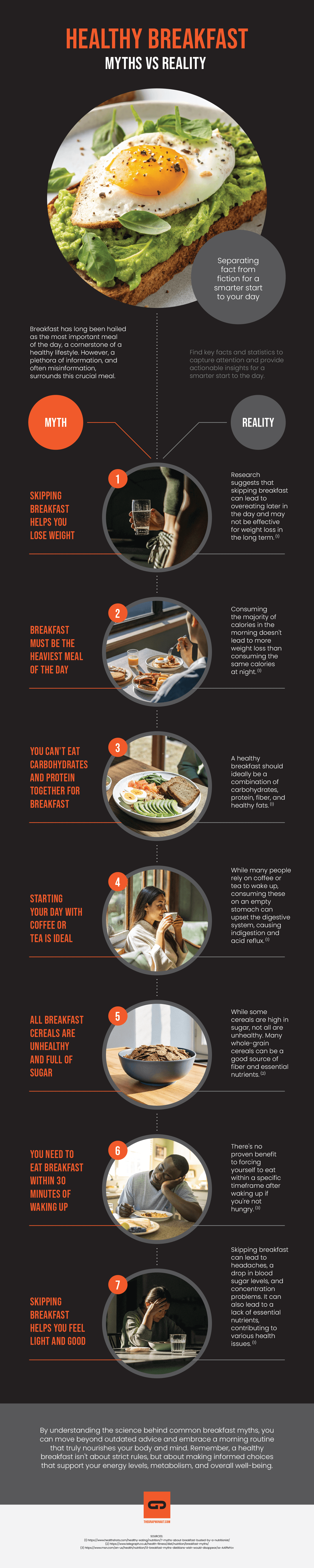
One of the most persistent myths is that skipping breakfast is a surefire way to shed pounds. While the logic seems simple—fewer calories in, fewer pounds on—the human body is a complex system.
Research suggests that skipping breakfast can often lead to increased hunger and overeating later in the day, potentially sabotaging weight loss efforts. (1) Our bodies, after an overnight fast, benefit from aF morning refuel to kick-start metabolism and prevent the dreaded mid-morning energy crash that often leads to unhealthy snacking.
The “Heaviest Meal” Mandate
Another common misconception is that breakfast must be the heaviest meal of the day. The image of a kingly breakfast, followed by a prince-like lunch and pauper-like dinner, has been ingrained in our minds.
However, recent studies challenge this notion, indicating that the timing of your largest meal may not significantly impact weight loss as much as the total caloric intake and quality of food throughout the day. (1) What truly matters is consuming the right quantity and quality of food tailored to your individual needs and activity levels.
The Power of Balanced Macronutrients
And what about the age-old debate of carbohydrates and protein? Many believe these two macronutrients should be kept separate at breakfast.
The reality, however, is that a balanced breakfast thrives on their synergy. Combining complex carbohydrates, lean protein, fiber, and healthy fats provides sustained energy, helps regulate blood sugar, and keeps cravings at bay. Think eggs with whole-wheat toast and vegetables or a bowl of oats with milk and fruits. These combinations offer a powerful nutritional punch.
Rethinking Your Morning Brew
Even our beloved morning rituals, like that first cup of coffee or tea, aren’t immune to scrutiny.
While they provide a much-needed jolt, consuming them on an empty stomach can irritate your digestive system due to their acidity and caffeine content, potentially leading to indigestion or acid reflux. Opting for a protein shake, a vegetable smoothie, or even fruit juice (with a mindful eye on sugar content) can be a gentler, more nourishing start.
Navigating the Cereal Aisle
Finally, let’s tackle the cereal aisle. Not all cereals are sugar-laden villains. While it’s true that some are highly processed and high in sugar, many whole-grain options offer valuable fiber and essential nutrients. (2) The key lies in reading labels, looking for a good carbohydrate-to-fiber ratio (preferably 10:1), and being mindful of portion sizes.
A surprising 9 out of 10 people over-serve their cereal by an average of 19%, highlighting the importance of mindful eating. (2)
Personalizing Breakfast
The world of breakfast is far more nuanced than simple myths suggest. It’s not about rigid rules—it’s about understanding your body, making informed choices, and embracing a balanced approach.
By debunking these common misconceptions, you can transform your morning meal into a truly healthy and energizing start to your day. Fuel your body the right way, and you’ll be amazed at the difference it can make.
FAQ
Not necessarily. While breakfast can provide important nutrients and energy after an overnight fast, the science isn’t black and white. What matters most is the total quality and quantity of food you eat throughout the day, not just when you eat your first meal.
This is a common myth. Skipping breakfast can often trigger increased hunger later in the day, leading to overeating and unhealthy snacking — which can actually work against your weight loss goals. A balanced morning meal helps regulate metabolism and appetite.
Not necessarily. Research suggests that total daily caloric intake and food quality matter more than the size of any single meal. Breakfast doesn’t need to be your heaviest meal — it just needs to be nutritious and tailored to your energy needs.
Yes — and it’s actually beneficial. Combining complex carbohydrates, lean protein, fiber, and healthy fats provides sustained energy, stabilizes blood sugar, and reduces cravings. Examples include eggs with whole-wheat toast or oats with milk and fruit.
It can be. Coffee and tea are acidic and high in caffeine, which may irritate your digestive system if consumed before eating — potentially causing indigestion or acid reflux. A protein shake, smoothie, or fruit juice can be a gentler alternative to start your morning.
It depends on the cereal. Many are highly processed and sugar-heavy, but whole-grain options can offer valuable fiber and nutrients. Look for a carbohydrate-to-fiber ratio of around 10:1 on the label, and be mindful of portion sizes — studies show most people over-pour cereal by about 19%.