

Humans have always had an intimate relationship with the birds around them. The ancient Egyptians saw the heron-like Bennu bird as a symbol of renewal and rebirth. The Greeks associated the goddess Athena with a small owl. Even the Norse god Odin traveled with Huginn and Muninn, two ravens representing thought and memory, respectively.
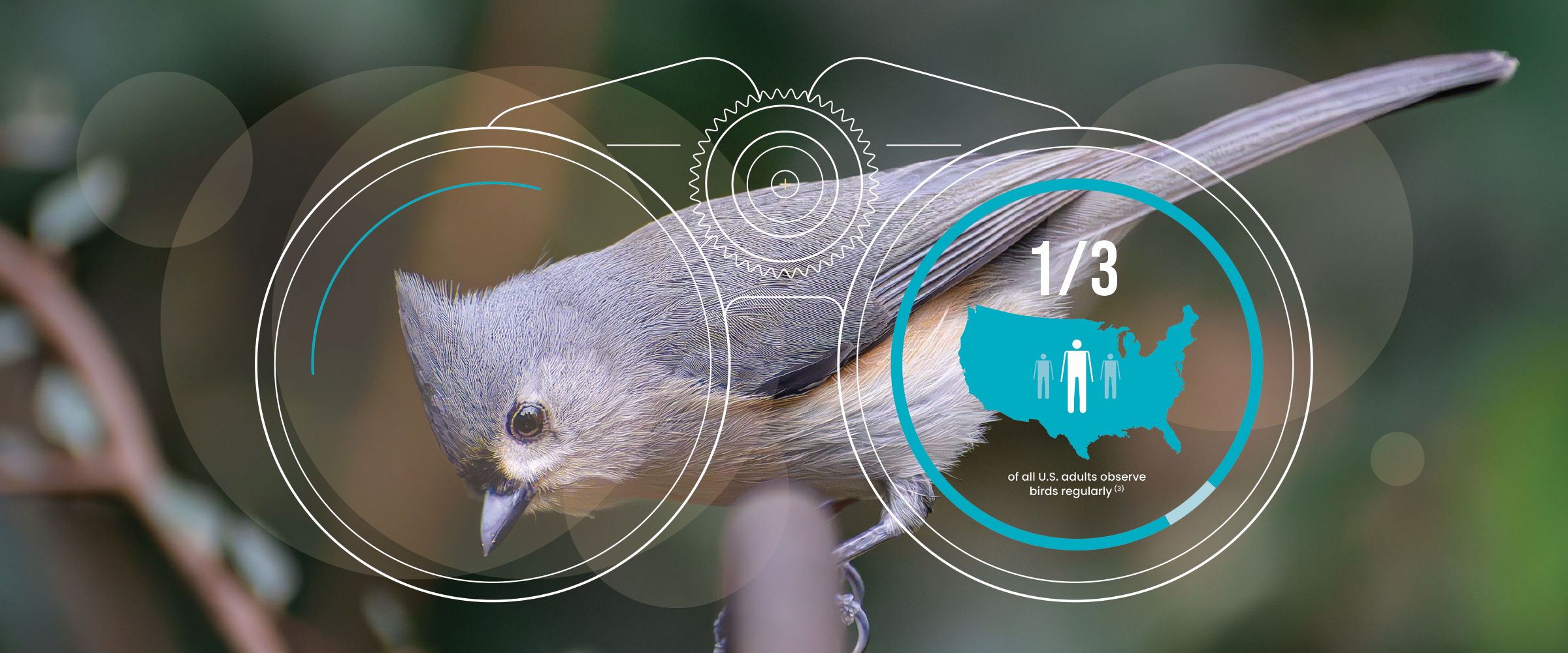
Today, birds are just as majestic and—in many cases—mysterious as they ever were. And the practice of birdwatching is as popular as ever. In the U.S. alone, more than a third of adults observe, photograph, or feed the flying creatures around them.
Why is birdwatching such an indelible practice? And what does it offer those who trek into the natural world? This birdwatching guide has those answers and more.
What Exactly Is Birdwatching?
At its surface, birdwatching—also known as birding—is the simple practice of observing birds in their natural habitats. But for the 96 million people who practice the hobby in their backyard and the 43 million who travel to find new birds, it’s about much more than watching.
Birding offers people the opportunity to realize the cognitive and physical benefits of being in nature, which has been proven to improve cardiovascular health and mental wellbeing. Research shows that the practice helps us calm our nervous systems, improve our microbiome, and reduce the impact of conditions like depression and anxiety—all while learning new things about some of Earth’s most beautiful creatures.
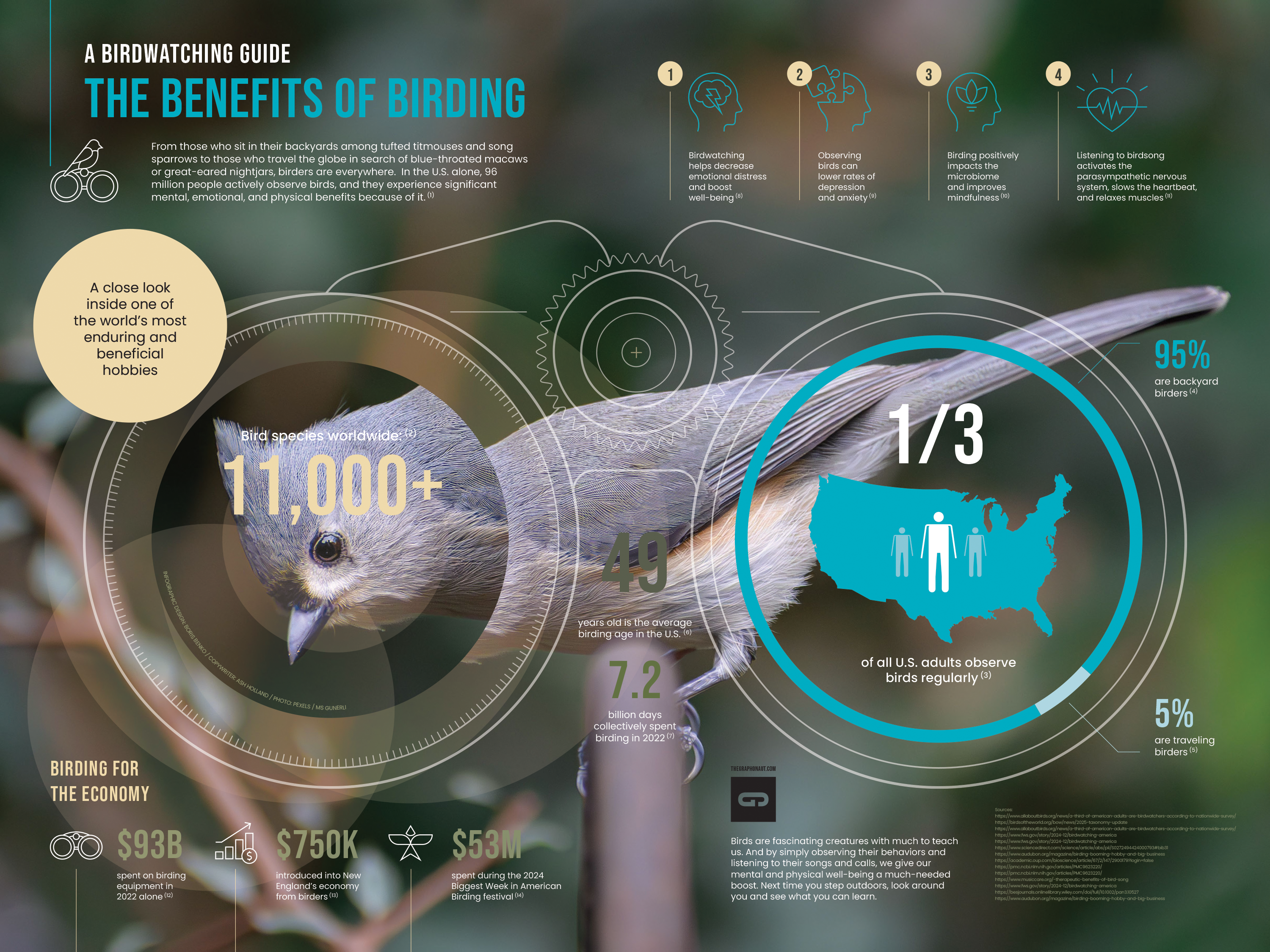
Infographic design by Boris Benko
Birding Best Practices
The next time you see an American robin searching for worms in your yard or a black-capped chickadee visit your feeder, stop and take notice. That’s it: You’re birdwatching. To take the practice to the next level, though, follow these best practices:
1. Start Small
You don’t need to travel all the way to New Zealand to hunt down the elusive Kākāpō to be birdwatching. Instead, start looking up on your daily walks. Observe what’s around you on a day-to-day basis. Look at the colors, sizes, and shapes of the birds you see. Watch the birds’ habits, flight patterns, and interactions. That’s all it takes to be a birder. The more you watch, the more you’ll notice—and your knowledge will inevitably build from there.
2. Write—or, Better Yet, Draw—What You See
A big part of birdwatching is recording what you observe. Some people carry a notebook and pencil everywhere they go to jot down notes about the birds they see on their commutes. Others draw unique wing patterns or bill shapes. Others use mobile apps to record their sightings. The key thing is taking note of what you see to lock in your learnings, so find the method that works best for you.
3. Grab a Good Birdwatching Guide
A birdwatching guide—aka a field guide—is a useful tool for any birdwatcher. They’re like an encyclopedia of drawings and facts about birds, allowing you to look up and identify what you see. Check out Audubon’s breakdown of top-notch birdwatching guides to see which resonates.
4. Go Mobile
Many birders worldwide have supplemented their paper notebooks with digital apps, which enable folks to quickly ID and record bird sightings. More than 1.5 million people use the popular Merlin app, and 1.3 million turn to eBird’s monthly checklist. Download an app to make on-the-go birding that much easier.
5. Get Binos
When you’re ready, invest in a nice pair of binoculars. The Nikon Prostaff 3S 8×42 and Athlon Neos 8×42 are great starter binos, while equipment like the Vortex Razor UHD 8×42 offer far more capabilities (and a much higher price tag). The advice here is similar to above: Start small, see how it works, then upgrade when you need something more.
6. Embrace the Silence and the Slowness
It’s tempting for new birders to want to reach for their phones, keep their feet moving, or record as many birds as possible. But the beauty of birding is that it gives you a rare opportunity to be silent and still and slow. It’s about reveling in the pleasure of observing alone. There doesn’t have to be a goal or destination. You don’t even have to leave your backyard if you don’t want to. Embrace the moment of peace.
A Practice Most Ancient—and Most Modern
There’s a reason birdwatching is one of humanity’s oldest and most enduring hobbies: There’s simply much to learn from birds.
Northern cardinals teach us why sharing, listening, and communicating are keys to long-lasting relationships. Yellow warblers show us the brilliance of using materials around us (in this case, spiderwebs) to enhance the security and beauty of our constructions. The ruffed grouse demonstrates the musical creativity inherent in all of us. And common crows and blue jays remind us that playfulness is essential to life.