The Great
Pacific
Garbage
Patch
where plasticneverdisappears
The Great Pacific Garbage Patch is only the most well-known of several massive accumulations of floating plastic waste in the world's oceans. These garbage patches form where ocean currents converge, trapping debris in rotating spirals. Over time, they continue to grow, concentrating microplastics, harming marine life, disrupting ecosystems, and acting as long-term reservoirs of plastic that gradually breaks down into ever smaller particles rather than disappearing.
Click the numbered markers for details on the major ocean garbage patches.
The Great Pacific Garbage Patch is a collection of marine debris in the North Pacific Ocean. 80% of the plastics in the Garbage Patch come from the land (3)
Use arrow keys to grow the animation. Arrow Down or Right to grow; Arrow Up or Left to shrink until it reaches full size. Once at full size it stays. Press End to jump to full size.
The Great Pacific Garbage Patch is defined as the area with more than 10 kg of plastic per km2 (2)


A rapid rise in ocean plastic
Over a 7-year period (2015–2022), the density of plastic fragments in parts of the patch rose from 2.9 kg/km² to 14.2 kg/km².
Inside the plastic patch

46%
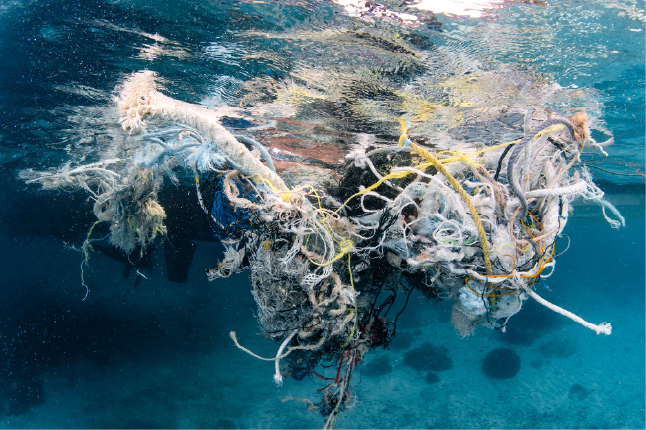
Lost and abandoned fishing nets“Ghost nets” account for about 46% of the total mass in the patch. (5)

8%
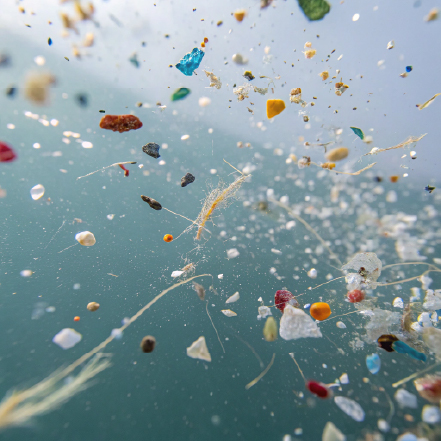
Microplastics (<5 mm)Make up only 8% of the patch’s mass — but they represent 94% of all the pieces (by count) (5)
Scroll to zoom the globe in and out. It stays at full size after you zoom in fully.
The weight of the Garbage Patch
(approximate total mass in metric tons)
Plastic degradation time (7)
(approximate, in years)
*often considered virtually non-biodegradable and persisting indefinitely
What we use today drifts far into the future
Every piece of plastic ever made is still somewhere on the planet. The Great Pacific Garbage Patch didn't appear overnight — and neither will solutions. But every reduction in plastic use today means one less object drifting for centuries.
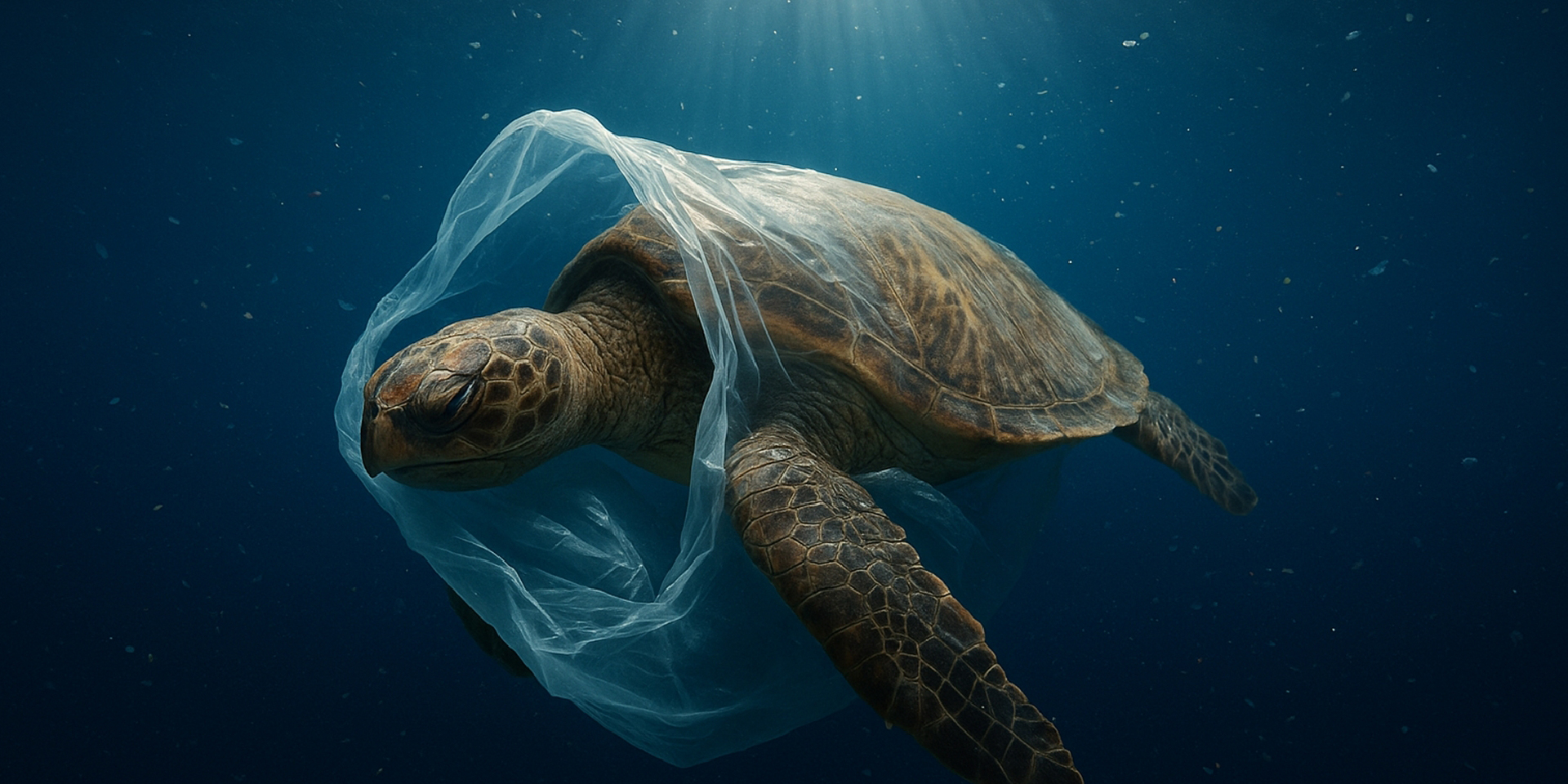
Ocean plastic is a global problem, but part of its solution starts locally.
Choosing fewer single-use plastics, supporting cleanup innovations, and insisting on better waste systems reduces the flow and helps keep another patch from forming. Everyone can help.
PRODUCED BY GRAPHONAUT · 2026
INFOGRAPHIC CONCEPT & DESIGN: Boris Benko
ILLUSTRATIONS / GRAPHIC ELEMENTS / DATA VISUALIZATIONS: Boris Benko, Josip Dujmović
COPYWRITING & RESEARCH: Goran Koprenica
ANIMATIONS: Vedran Jevtović
CONTENT DIRECTOR: Colin Eldridge
COPY EDITOR / PROOFREADER: Jacob Roundy
FRONT-END DEVELOPER: Amy Evans
SOURCES: